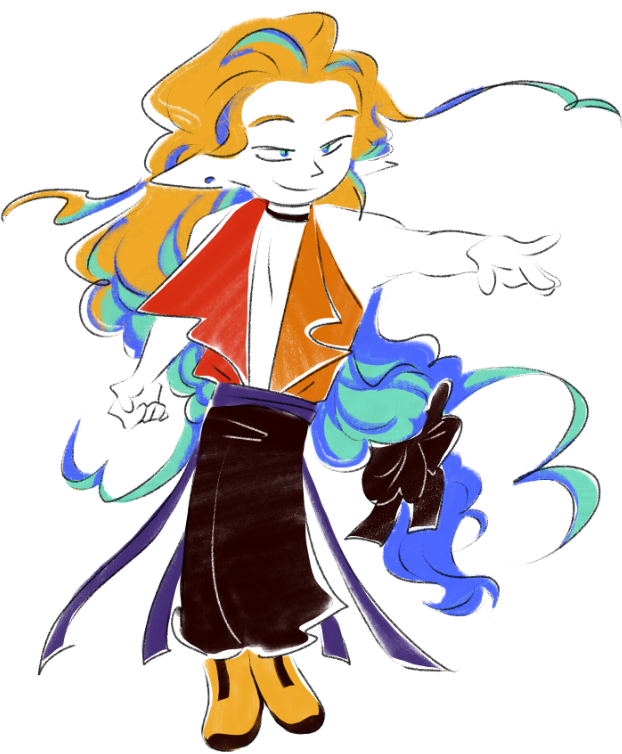
Pseudomonas aeruginosa is a bacterial inhabitant of soil and water, known far and wide in the bacterial world for his exceptional beauty and charm. Like many Pseudomonas, Aeruginosa enjoys travelling, and his freedom what’s most important to him. Along with Pseudomonas syringae and fluorescens, he is the most approchable member of the triade by which the Pseudomonas genus made itself known.
Aeruginosa is fully aware of the effect his looks exert on others, and sometimes uses that to deceiving ends. He is one of the few bacteria to be pathogenic to organisms of two different reigns (Animalia and Plantae) 1,2. Pathogeny-wise, he is also an adept follower of the ways of Yersinia pestis. As an opportunistic, and very adaptable pathogen, he can cause a variety of infections. He is equipped with very many virulence factors, including an arsenal of secretion systems (type 1, 2, 3, 5 and 6) to secrete toxins from, siderophores, and intrisic antibiotic resistance factors. 2,3,4,5. He is also very sociable and can pick up on bacterial communication signals. His ability to be extensively motile make him easier for him to travel as he likes.
Backgound
Aeruginosa grew up with his brothers, Fluorescens and Syringae.
Growing up, Aeruginosa was rejected by Fluorescens alongside Syringae. Then, as Syringae had to fight his ground on plant hosts as an ice-nucleating bacterium and opportunistic pathogen, Aeruginosa found himself neglected by him, too. This neglect led him to stray from his brother’s watch and seek other people’s attention more, which he got plenty of.
For long, the naive young Aeruginosa didn’t realise what this attention stemmed from, as he wasn’t quite aware of his own charm. Syringae, on the other hand, was uncomfortable with all the attention Aeruginosa got, and ended up distancing himself from his brother, too. This is the first time Aeruginosa’s supernatural beauty began to feel like a burden to him.
The more Aeruginosa accepted other’s attention — owing to his strained relationship with his brothers— the more he realised that people do not love him for who he really is, but that they adore an idealised version of him, based on his physical appearance. Upon seeing him, even the toughest bacteria can become weak-willed and fold over to please him. Aeruginosa felt the most alone when, after losing his temper with one of his admirers, he realised that the spell cast over him had not been broken in the slightest.
The realisation that people are willing to excuse his behaviour because of his physical appearance ends up revulsing Aeruginosa himself. Abandoning all moral compass, he sets out to explore just how far he can push the boundaries of pettiness, treachery and manipulation, while still being adored. He begins to become more and more agressive towards plants. Although some individuals can take slight offense, no one holds a grudge against him.
His mindset soon leads him to meet Y. pestis. Pestis immediately senses in Aeruginosa a shared thirst for carnage. In the midst of plague epidemics, Aeruginosa joins the nascent circle of those most devoted to Pestis, second only to his close friends. The prospect of joining the human pathogens distracts him and helps him escape his condition as an elusive beauty. It is in this context that Aeruginosa meets Staphylococcus aureus.
Aureus, too, is one of Pestis’s followers. At first glance, Aeruginosa thinks he can easily charm him in order to take control of the epidermis more quickly. However, he soon realises that Aureus is far less easily swayed than he appears. He tries nonetheless to win special favours from him, without much success. Stung by this, Aeruginosa becomes obsessed with the idea of making Aureus fold.
One day, Aureus asks Aeruginosa to follow him into the bronchi. At the time, Aeruginosa hadn’t explored the lungs very often, but he agrees, intrigued by the suggestion. What awaits him is none other than an ambush set by Aureus in the mucus-filled bronchi, from which Aeruginosa is unable to escape. On this occasion, Aureus confronted Aeruginosa, revealing that he had seen right through his intentions from the very beginning. He threatened to turn the entire microbiota of the epidermis against him, and to make Aeruginosa his mortal enemy.
Trapped in a snare from which he could not extricate himself, and to his own surprise, Aeruginosa realised the extent of his obsession with Aureus. Instead of flying into a rage, he succumbs to a passion that compels him to continue seeking Aureus’s attention, one way or another. With this new obsession in mind, Aeruginosa no longer cared how others perceived him. He had a realisation and regretted having chosen to focus his attention on those who saw only his façade all this time, rather than on the members of his own genus.
As life goes on, Aeruginosa’s sense of isolation begins to fade. His relationships with his brother Syringae improves. In the spirit of the Pseudomonas genus, he sets out to get to know the other followers of Pestis better and leads a nomadic life that brings him satisfaction.
Personality
As a social butterfly with an easygoing attitude, Aeruginosa is appreciated by many, but not always for the right reasons. He does find himself beautiful, though it is more of a burden for him to bear.
Though he rarely speaks the truth, non-infectious settings are when Aeruginosa will have the most chances of being sincere and willingly helpful. Traveling is what he enjoys the most, because he likes exploring all kinds of environments. Aeruginosa has a heightened sense for things he finds aesthetically pleasing, himself. He sometimes marvels at the little things, and, to a lucky few, will give heartfelt advice. It is always well-intentioned, even when it seems a bit crude.
Though he bears witness to many conflicts, he’d rather withdraw from them and reinforce positive microbial interaction in his environment. All he does, he does for fun, so he doesn’t see a point in entertaining serious ill-will. He doesn’t want to get caught up in fights or drama, as he does his best to avoid overthinking things in general, though he doesn’t shy away from putting people in their place.
This whole attitude changes radically whenever Aeruginosa comes across an occasion to infect a host. As previously stated, fun and entertainment are Aeruginosa’s main compass; morals, not so much. He enjoys the thrill of fighting for dominion in general, no matter where or against whom. This is why he has been drawn to infecting humans, as they can be much more of a challenge to overcome to him.
Relationships
Much to both his pleasure and his dismay, Aeruginosa goes through life constantly putting up a show. He is very social and gets along well with others in general. But, the truth is, aside from some close friends and Aureus, deep down, the way he feels about others varies between complete indifference and visceral hate. This is because of their general inability to see past his appearance.
In general, no one ever holds grudges against Aeruginosa. Even strong-willed bacteria can succumb to the attraction he inspires them. He learned most commensals are left completely in awe by his looks, which often trick them into being way less wary of him than they should – even when they clearly remember him.
Sadly, Aeruginosa himself is sometimes the target of other bacteria, too. Usually other opportunistic pathogens, they obsess over him and want to keep him for themselves, which can lead to violence on their part. In spite of being aptly armed against them, these encounters remain very scary, degrading, and isolating to Aeruginosa. These two sides of the same coin make it very hard for him to fully, and genuinely, open up and trust anyone new.
Deinococcus radiodurans
As they both travel extensively, they meet quite often. Aeruginosa has gotten used to the fact that there’s nothing he can hide from Radiodurans. He finds it quite frustrating, especially when they are having more profond conversations, because he’s not used to interacting with people this way. Otherwise, they get along great and have a wonderful time with one another.
Mycobacterium avium
Avium is Aeruginosa’s most trusted “friend”, if not advisor. He is one of the only people Aeruginosa trusts and feels completely safe with, even though he can tell that Avium is in love with him, too. They are frequently found co-existing together in the lung 6,7.
Pseudomonas syringae
In spite of their strained relationship, Aeruginosa still loves and values Syringae as his brother. Although he doesn’t feel like he can completely confide in him yet, he realises that most of their arguments stemmed from misunderstandings.
Staphylococcus aureus
Aeruginosa finds himself havie to coahbit with Aureus very often 8 and is obsessively, madly in love with him. Though he doesn’t have much hope for it, he would like for them to officially be partners, one day. Aeruginosa enjoys both defeating Aureus, and being defeated by him, both in more or less gruesome ways 9,10.
Yersinia pestis
Aeruginosa greatly admired Pestis determination in relentlessly fighting against humans. Pestis became a source of inspiration for him to plow through life when needed. He can also relate to Pestis being estranged from his own genus. As a person, though, Aeruginosa thinks Pestis can get a little bit too headstrong about things that shouldn’t matter to him. He can also tell that Pestis wants to me right more often than not, and tends to indulge him.
Trivia
- Like other bacteria with long hair, he can use them as a way of locomotion, to grab onto things… etc.
- In that case hair would be akin to type I fimbriae… I think …
- Though he is somewhat ubiquitous, he tends to stick close by human populations 4,11.
- He is quite frequently used as a model in the lab world-wide. It is painful to him just like it is to Coli. But Aeruginosa is lucky enough to have strong enough environmental niches to help him somewhat overcome that.